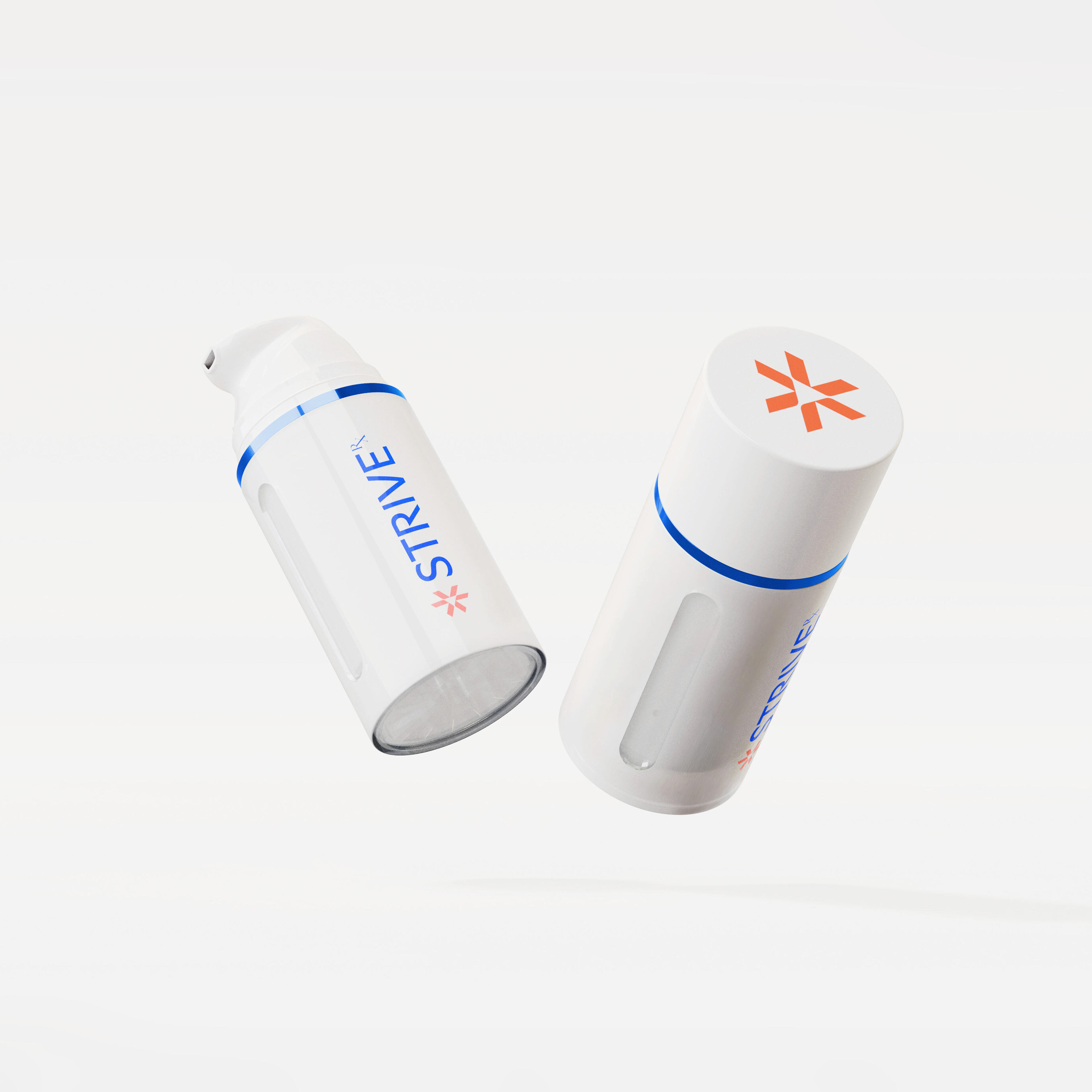
The image shown is for illustrative purposes only and does not represent the actual appearance of your specific compounded medication.
Vasoactive Intestinal Peptide (VIP)
Vasoactive Intestinal Peptide (VIP) is a naturally occurring 28 amino acid peptide renowned for its broad physiological roles such as vasodilation, anti-inflammatory activities, and the regulation of endocrine and exocrine systems. It is primarily used to help manage Chronic Inflammatory Response Syndrome.
Vasoactive Intestinal Peptide
A peptide that is present in various tissues, including the gut, pancreas, central nervous system, and peripheral nervous system.
Suggested use
Administer 1 spray (50 mcg) four times daily alternating nostrils for the first month. May increase to 2 sprays (100 mcg) four times daily alternating nostrils for the second month.
IMPORTANT INFORMATION ABOUT COMPOUNDED MEDICATIONS
This medication has been compounded (custom-prepared) by a pharmacy. Compounded medications are specially prepared for individual patient needs based on a valid prescription from a prescribing healthcare practitioner and, as such, are not reviewed or approved by the U.S. Food and Drug Administration (FDA) for safety or efficacy. Compounded drugs are intended for patients whose prescriber has determined their medical needs are not met by an available FDA-approved drug. These statements have not been evaluated by the FDA.
This compounded preparation:
- Has not been approved by the FDA
- Has not undergone FDA review for safety, effectiveness, or quality
- Is prepared specifically for you based on your prescriber's order
- Individual outcomes may vary
Dosing is determined by the prescribing provider based on patient-specific factors. Always follow your healthcare provider's instructions. Compounded medications are not subject to FDA approval and lack the same safety and efficacy data as FDA-approved commercial medications. This medication should be prescribed and monitored by a licensed healthcare professional familiar with the condition being addressed and the specific applications of the medication.
This compounded medication is only available when the commercially available product is unavailable or when a prescriber determines that there is a clinically significant difference for the patient.
Medicine Information
- Help regulate inflammatory and autoimmune disorders by suppressing pro-inflammatory factors
- Supports nerve regeneration in grey matter nuclear atrophy (as seen in CIRS)
- May decrease neuroinflammation and encourage neuroplasticity in neurodegenerative diseases such as Alzheimer's and Parkinson's disease
- Enhances airway relaxation and oxygenation
- Relaxes intestinal smooth muscle and stimulate luminal secretion of water and electrolytes; may assist in improving motility.
- Normalize estrogen and testosterone levels
- Transiently improves insulin sensitivity and stimulates glucose-dependent insulin secretion
- Promotes proliferation of pancreatic islet β-cells
Possible Side Effects
- Headache, dizziness, stomach discomfort, and flushing
- Hypotension
Vasoactive intestinal peptide (VIP) mediates its effects primarily through VPAC1 and VPAC2 receptors, which belong to the class B G protein-coupled receptor (GPCR) family. VIP initiates an enzymatic cascade leading to the activation of cAMP Response Element-Binding protein (CREB), influencing gene expression and various cellular responses. The activation of these pathways leads to smooth muscle relaxation, neuroprotection, vasodilation, enhanced glucose-dependent insulin secretion, reduced pro-inflammatory cytokines , and increased anti-inflammatory cytokines.
IMPORTANT INFORMATION ABOUT COMPOUNDED MEDICATIONS
This medication has been compounded (custom-prepared) by a pharmacy. Compounded medications are specially prepared for individual patient needs based on a valid prescription from a prescribing healthcare practitioner and, as such, are not reviewed or approved by the U.S. Food and Drug Administration (FDA) for safety or efficacy. Compounded drugs are intended for patients whose prescriber has determined their medical needs are not met by an available FDA-approved drug. These statements have not been evaluated by the FDA.
This compounded preparation:
- Has not been approved by the FDA
- Has not undergone FDA review for safety, effectiveness, or quality
- Is prepared specifically for you based on your prescriber's order
- Individual outcomes may vary
Dosing is determined by the prescribing provider based on patient-specific factors. Always follow your healthcare provider's instructions. Compounded medications are not subject to FDA approval and lack the same safety and efficacy data as FDA-approved commercial medications. This medication should be prescribed and monitored by a licensed healthcare professional familiar with the condition being addressed and the specific applications of the medication.
Hou X, Yang D, Yang G, Li M, Zhang J, Zhang J, Zhang Y, Liu Y. Therapeutic potential of vasoactive intestinal peptide and its receptor VPAC2 in type 2 diabetes. Front Endocrinol (Lausanne). 2022 Sep 20;13:984198. doi: 10.3389/fendo.2022.984198. PMID: 36204104; PMCID: PMC9531956.
Shoemaker RC, Katz D, Ackerley M, et al. Intranasal VIP safely restores volume to multiple grey matter nuclei in patients with CIRS. Internal Medicine Review 3 (2017): Issue 4. pg 1-14.
Smalley SG, Barrow PA, Foster N. Immunomodulation of innate immune responses by vasoactive intestinal peptide (VIP): its therapeutic potential in inflammatory disease. Clin Exp Immunol. 2009 Aug;157(2):225-34. doi: 10.1111/j.1365-2249.2009.03956.x. PMID: 19604262; PMCID: PMC2730848.
Vu JP, Larauche M, Flores M, Luong L, Norris J, Oh S, Liang LJ, Waschek J, Pisegna JR, Germano PM. Regulation of Appetite, Body Composition, and Metabolic Hormones by Vasoactive Intestinal Polypeptide (VIP). J Mol Neurosci. 2015 Jun;56(2):377-87. doi: 10.1007/s12031-015-0556-z. Epub 2015 Apr 23. PMID: 25904310; PMCID: PMC4458420.
Smalley SG, Barrow PA, Foster N. Immunomodulation of innate immune responses by vasoactive intestinal peptide (VIP): its therapeutic potential in inflammatory disease. Clin Exp Immunol. 2009 Aug;157(2):225-34. doi: 10.1111/j.1365-2249.2009.03956.x. PMID: 19604262; PMCID: PMC2730848.